The fusion of the best Math AI and Learning Platform
Better Grades in Math: The 3 Best Learning Strategies for Effective Studying
Introduction
- . Many students study for hours, over days or even weeks, write down formulas, solve countless problems – and yet little remains in the end. The result? Poor grades on exams and frustration.
- . The problem is not a lack of intelligence or too little effort – but the wrong learning strategy. Knowledge does not simply stay in your head through constant repetition; it must be actively processed and consolidated.
- . The good news? With the right method, you can learn more effectively with minimal effort. In this article, we introduce three proven learning strategies that will help you optimize your studying and achieve better grades in the long term.
TIP 1
Avoid Mistakes and Keep Calculating – Secure Your Points!
The Feynman Method helps you learn maths not just superficially, but truly understand it. The rule is: If you can’t explain it simply, you don’t understand it.
How the Feynman Method Works in Math:
- 1. Choose a topic you want to understand, e.g., derivatives or probability.
- 2. Explain the concept as simply as possible, as if you were explaining it to a fifth grader.
- 3. Avoid technical terms – if you’re forced to express the idea in simple words, you’ll see if you really understand it.
- 4. Stumble anywhere? Then you’ve found a knowledge gap – look up the topic and restate it even more simply.
- 5. Repeat the process until you can explain the topic effortlessly.
Example
Feynman Method for Derivatives:
- Instead of just learning the rule for derivatives, you could explain it like this:
- “The derivative shows me how steep a function is at a certain point. For example, if I take the derivative of f(x) = x², it means that the slope at each point x is determined by the number 2x. That means, the larger x gets, the steeper the function becomes.”
WHY this works
- . Not just memorizing maths, but truly understanding it.
- . Identification of knowledge gaps that you can then specifically address.
- . Better recall because active explaining challenges the brain more.
TIP 2
Spaced Repetition: Remember Long-Term Instead of Forgetting in the Short Term
Instead of learning everything at once, you should review the material at regular intervals. This is called spaced repetition – a method by which your brain stores knowledge long-term instead of forgetting it after a few days.
How Spaced Repetition Works in Math:
- 1. Learn new topics in small steps.
- 2. Review the material at specific time intervals, e.g.:
- 1. Review: after 1 day
- 2. Review: after 3 days
- 3. Review: after 1 week
- 4. Review: after 1 month
- 3. Review difficult topics more frequently, simple topics less often.
Example
Spaced Repetition for Formulas and Problems
Instead of memorizing all derivative rules in one day, you can review them like this:
- . Day 1: Learn the basics of derivatives (definition, simple examples).
- . Day 2: Review the product rule and chain rule with two practice problems.
- . Day 5: Solve new derivative problems from different areas.
- . Day 10: Test your knowledge with mixed exercises and exam-like questions.
WHY this works
- . Formulas and rules stay in your long-term memory.
- . Prevents “bulimic learning,” where you forget everything right after the exam.
- . Better time management, since you work specifically on your weaknesses.

Start now & improve your maths grades! 🚀
TIP 3
Dual Coding: Learning with Images and Text Simultaneously
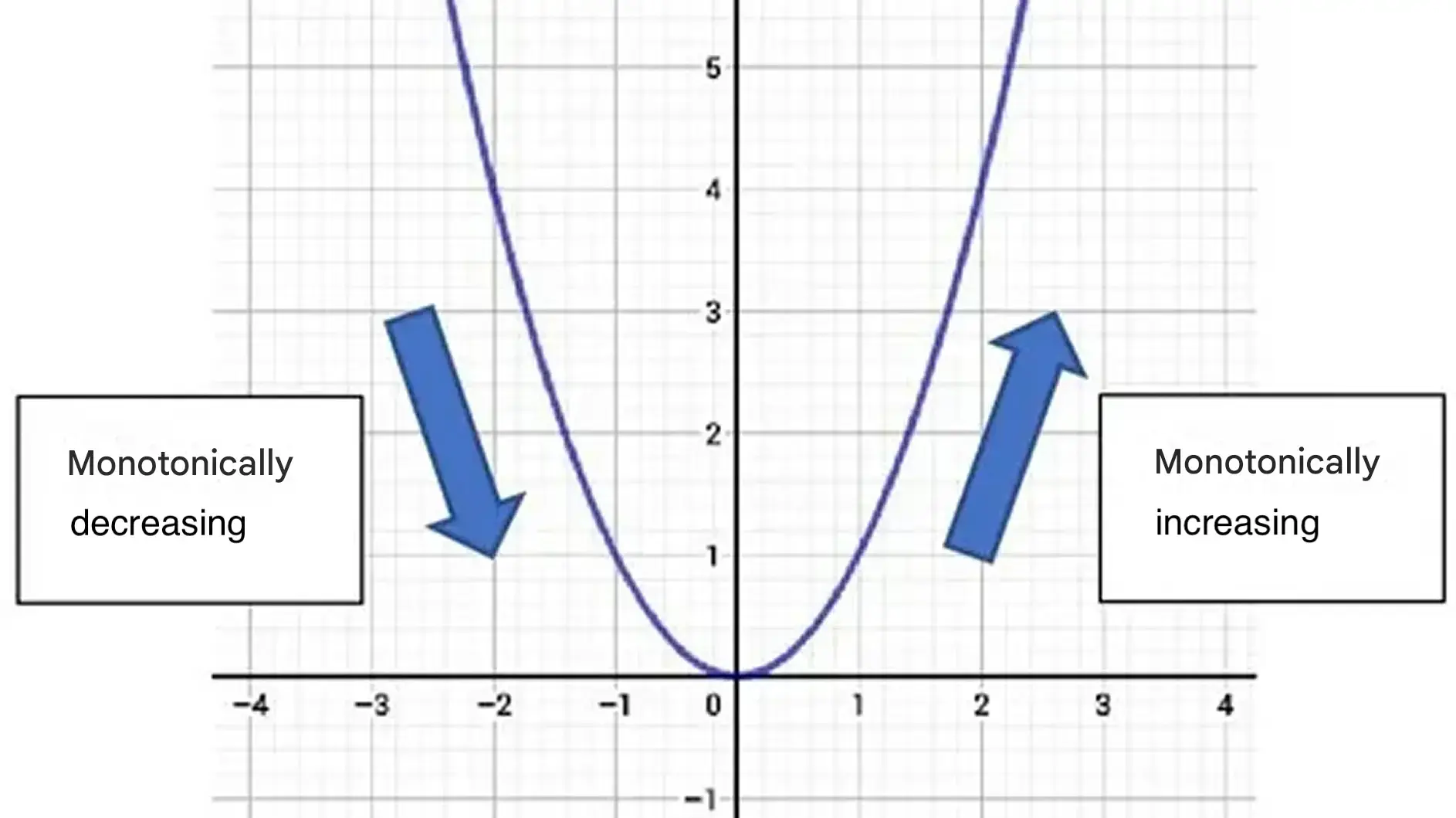
Many students make the mistake of learning maths only with text and numbers. Our brains, however, process information better when it’s combined with visual elements—this is called dual coding.
How Dual Coding Works in Math:
- 1. Use sketches and diagrams to illustrate formulas and concepts.
- 2. Create your own mind maps for mathematical topics to see connections.
- 3. Highlight important steps and patterns with colors to recognize them more quickly.
- 4. Use visual mnemonic devices to make formulas easier to remember.
Example
Dual Coding in Integral Calculus
Instead of just memorizing integral formulas, you could:
- . Use a graphical representation of an integral to see that the integral describes the area under a function.
- . Create arrow diagrams to visualize how a function is first differentiated and then reversed by the integral.
- . Use color coding: blue for derivatives, red for integrals, green for power rules—this helps with quick recall during exams.
WHY this works
- . Linking text and image improves memory retention.
- . Complex maths topics become more understandable because they become visually tangible.
- . Exam confidence increases because you can recall formulas more easily through images.
TIP 4
Learn More Efficiently with RocketTutor
Besides proven learning strategies like the Feynman Method, Spaced Repetition, and Dual Coding, the right digital support can make the learning process even more effective. RocketTutor is an innovative learning platform that helps you study in a targeted and structured way.
Advantages of RocketTutor:
- ✅ Personalized learning plans: The app analyzes your current level of knowledge and creates a tailored plan so you learn efficiently and don’t neglect any topics.
- ✅ Targeted practice tasks: Instead of solving random problems, you get exactly the content that matches your learning progress—so you don’t waste time on unnecessary exercises.
- ✅ AI tutor for immediate help: If you get stuck on a problem, you can immediately receive an AI-powered explanation guiding you step by step through the solution.
- ✅ Long-term performance tracking: RocketTutor shows you which topics you’ve mastered and where you still need practice—ideal for identifying knowledge gaps early.

By combining these features with effective learning strategies, you can make your studying more structured, efficient, and sustainable. This way, you’ll make progress faster and go into your exams with more confidence.
Summary
- ✔️ Feynman Method:
- . Explain the topic simply until there are no knowledge gaps left.
- . Identifies weaknesses and helps improve understanding.
- ✔️ Spaced Repetition:
- . Learn at regular intervals instead of cramming at short notice.
- . Sustainable storage in long-term memory.
- ✔️ Dual Coding:
- . Combination of language and images to enhance the learning process.
- . Helps especially with complex and abstract topics.
With these three methods, you can learn more effectively, retain your knowledge long-term, and achieve better results.