The fusion of the best Math AI and Learning Platform
Learning Strategies for Good Grades in Math: How to Pass Every Test!
Introduction
- . Math exams can be challenging – but with the right learning strategies, you can significantly improve your chances of getting a good grade. Many students don’t fail because they lack subject knowledge, but because they don’t know how to study effectively or approach problems in exams. That’s why we’re sharing three proven tips today that will help you master even difficult maths problems.
- . Whether you’re preparing for a maths test or aiming for better grades in the long term, these methods will ensure you tackle problems with more confidence and structure. From clever calculation techniques to digital learning tools and visual support with sketches: here you’ll learn how to conquer exams more effectively!
TIP 1
Avoid Mistakes and Keep Calculating – Secure Your Points!
In maths, it often happens that you need an intermediate result to continue calculating—but you can’t get the right answer. Instead of getting stuck here and wasting valuable time, you can use a clever trick to still earn a good grade.
The “Follow-Through Error” Trick
Suppose you have to calculate the height of a pyramid but can’t arrive at the correct result immediately. Instead of pondering forever, you can simply make a plausible assumption about the height and continue calculating with it. Your final result may not be 100% correct, but if your calculation methods are correct from that point on, you’ll often still receive partial credit—and those points can make the difference for a better grade.
Math teachers don’t only evaluate the final result in exams, but also the solution process. A logical approach is usually rewarded, even if a small mistake occurred earlier. Therefore: if you get stuck on a test, work with your own assumption and continue calculating. This way, you can still collect important points instead of leaving a question completely blank.
Example
Where This Helps Most:
- . Geometry: If you can’t determine a length, height, or area exactly, continue calculating with an estimated value.
- . Calculus: In Extreme value problems or in curve sketching, you might make a calculation error. As long as you build your subsequent approach correctly, it counts.
Summary
In maths exams, it’s often better to keep calculating rather than leaving a problem blank. Use this trick to achieve a better grade in tests, even if you make a mistake!
TIP 2
The best maths app for exam preparation – RocketTutor use!
Digital learning aids are indispensable today if you want to understand maths better and practice specifically for exams. One of the best apps for this is RocketTutor – an AI-powered platform that prepares you optimally for maths tests with interactive practice exercises.
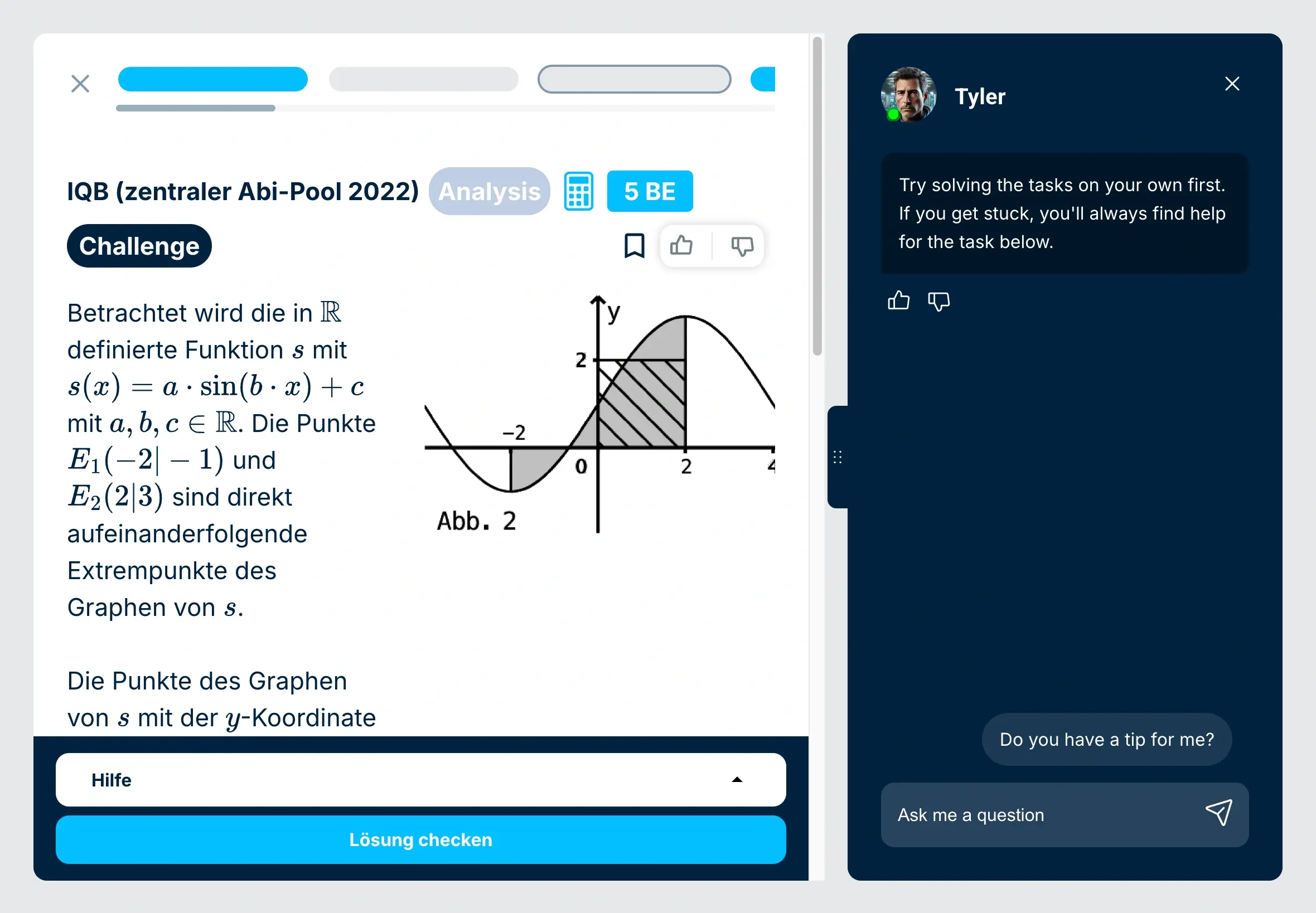
Why is RocketTutor so helpful?
- 1. Personalized tasks: The app identifies your weaknesses and adjusts the exercises to your current level. This way, you practice exactly what helps you achieve better grades.
- 2. AI explanation: If you don’t understand a problem, the AI not only explains the solution but also the calculation process – similar to a tutor.
- 3. Exam simulations: You can simulate tests under realistic conditions to optimally prepare for your next exam or maths test.
- 4. Immediate feedback: Unlike practicing with books or worksheets, here you get instant feedback on whether your solution is correct or incorrect, along with a detailed solution path..
Especially in exam preparation, RocketTutor is a strong support because you work specifically on your weaknesses and build your knowledge in a structured way. If you are looking for a maths app that truly helps you, this is one of the best options.
When should you use a website like RocketTutor?
For daily practice to continuously improve your maths knowledge
- . As a crash course before exams, using the Fast-Track learning plan to specifically eliminate your weaknesses and knowledge gaps
- . If you need strategies for solving specific problem types, there is always a method available
Digital learning aids like RocketTutor can help you understand maths more easily and go into tests with more confidence – a real secret weapon for better grades!

Start now & improve your maths grades! 🚀
TIP 3
Drawing Sketches – the Best Strategy for Optimization Problems & More
Many maths problems seem complicated at first glance – but if you represent them visually, they often become much clearer. Especially in geometry and analysis when doing curve sketching, a sketch is often the key to success.
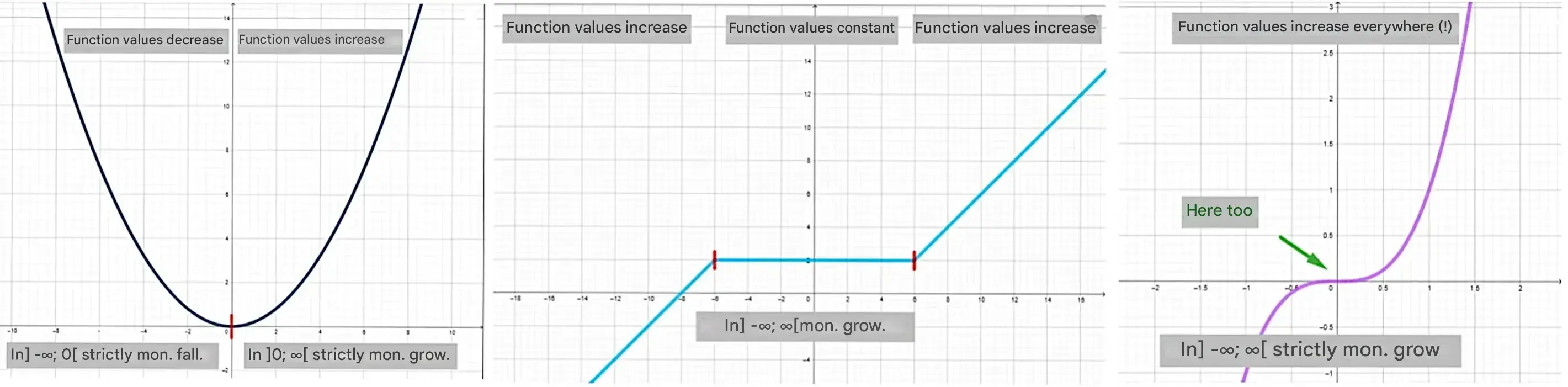
Why Are Sketches So Helpful?
- 1. Better imagination: A graphical representation helps you see through the problem faster.
- 2. Clarity in approach: Through a sketch, you often recognize immediately which steps you need to take.
- 3. Avoiding errors: Especially in optimization problems or in calculating maxima and minima, a sketch helps you avoid unnecessary calculation mistakes.
Example
Examples of Meaningful Sketches in Math
- . Geometry: When you need to calculate angles, lengths, or areas, a sketch helps you see the relationships.
- . Optimization problems: A rough drawing of the function can help you better determine maxima, minima, or inflection points.
- . Monotonic behavior: With a sketch, you can more easily imagine when a function is increasing or decreasing.
A Trick for Exams:
Even if you don’t need a perfect sketch, a rough drawing on paper already helps you gain clarity. Use this strategy to understand problems faster and solve them with more confidence!
With these three tips to better maths grades!
Math doesn’t have to be a scary subject – if you work with the right learning strategies, you can be much more successful in tests and exams.
Summary
- ✔ Use the “follow-through error” trick to keep calculating even after small mistakes and still achieve a good grade.
- ✔ Use digital learning aids like RocketTutor to practice specifically for exams and compensate for your weaknesses.
- ✔ Work with sketches to help you visualize difficult problems in geometry, analysis, and extreme value problems.
If you apply these three strategies, you will become more confident in maths, solve problems better, and improve your grades in the long term. Good luck on your next maths test!